


5 Everyday Habits That Support Better Digestion Naturally
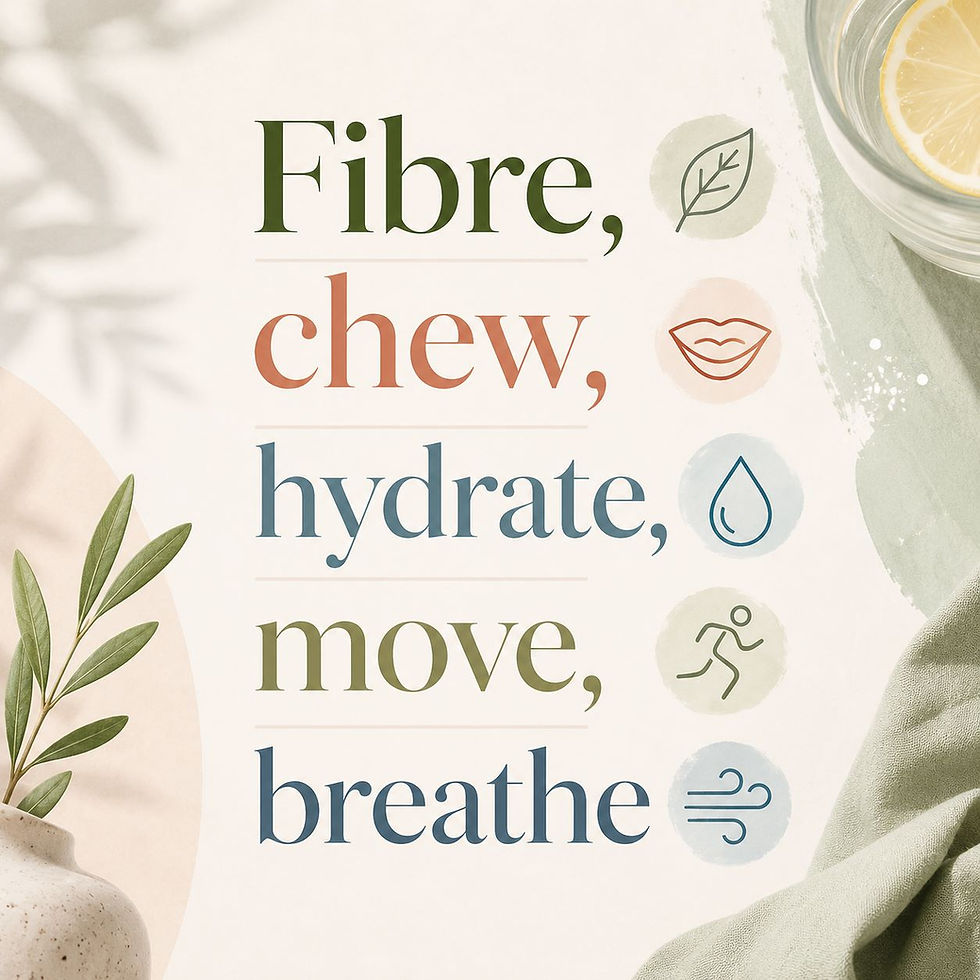
If your digestion feels unpredictable, uncomfortable or sluggish, it can affect your whole day. Bloating, reflux, constipation, loose stools, food sensitivity and post meal heaviness can leave you feeling frustrated and disconnected from your body. The good news is that you do not always need extreme diets or complicated supplement plans to begin. Often, small daily habits can help support better digestion naturally.
Digestion is influenced by what you eat, how you eat, your stress levels, hydration, fibre intake, sleep, movement and meal rhythm. At The Heart of the Matter Nutrition, I work with women across the United Kingdom who want to understand their gut symptoms from a root cause perspective, without feeling restricted or overwhelmed.
1. Chew Slowly and Eat Calmly
One of the simplest ways to support better digestion naturally is to slow down at mealtimes. Digestion begins before food reaches your stomach. Chewing breaks food into smaller pieces and mixes it with saliva, helping the rest of the digestive process work more smoothly.
Many women eat while working, driving, scrolling or rushing between responsibilities. When you eat in a stressed state, your body may not prioritise digestion in the same way. Harvard’s Nutrition Source explains that mindful eating practices, including breathing, paying attention to food and chewing slowly, can help counteract stress related eating patterns.
Try taking three slow breaths before meals, putting cutlery down between mouthfuls and noticing the smell, texture and taste of your food. This is not about being perfect. It is about giving your digestive system a calmer starting point.
2. Add Fibre Gradually
Fibre is one of the most important nutrients for better digestion naturally. NHS guidance explains that a diet rich in fibre can help digestion and prevent constipation. Fibre is found in plant foods such as oats, beans, lentils, fruit, vegetables, seeds, nuts and wholegrains.
However, more fibre is not always better overnight. The British Dietetic Association advises increasing fibre gradually to help avoid bloating and gas while your gut adjusts. This is especially important if you are prone to IBS type symptoms, bloating or constipation.
Start with one simple change. Add berries to breakfast, include lentils in soup, sprinkle ground flaxseed onto yoghurt, or add an extra portion of vegetables to dinner. Supporting better digestion naturally often comes from consistency, not sudden restriction.
You may also enjoy reading: Fibre Maxxing: Practical Strategies to Build Gut, Heart, and Brain Health
3. Hydrate Consistently
Water is essential if you want to support better digestion naturally. The NHS notes that without enough fluid, fibre cannot do its job properly and constipation may become more likely. Hydration helps keep stools softer and supports the movement of food through the digestive tract.
This does not mean forcing litres of water at once. A gentler approach may be to drink a glass of water with meals, keep a bottle nearby during the day, include herbal teas, and eat hydrating foods such as cucumber, berries, oranges, soups and leafy greens.
If you increase fibre but forget fluids, bloating or constipation may worsen. Fibre and fluid work together, so think of them as a pair.
Related reading: Water, The Forgotten Nutrient
4. Move Your Body Daily
Movement is another practical way to support better digestion naturally. A short walk after meals can support gut motility, reduce stress and help you reconnect with your body. You do not need intense exercise for digestive benefit. Gentle, regular movement often works beautifully for women who already feel depleted or stressed.
Walking, stretching, yoga, Pilates, gardening or light strength work can all help. The key is finding something realistic and sustainable. If constipation is part of your pattern, daily movement may be one helpful piece of the wider picture.
Related reading: Why Constipation Is More Than Just a Digestive Issue
5. Support Your Nervous System
Stress and digestion are closely connected. Harvard Health explains that poor gut health can affect wider wellbeing and that stress management techniques such as belly breathing, relaxation therapy and meditation may help support gut health. Harvard also notes that stress influences involuntary functions, including digestion.
If your gut symptoms flare during busy weeks, your nervous system may need support alongside nutrition. Try creating a short after work transition ritual, breathing before meals, taking lunch away from your desk, prioritising sleep, or spending a few minutes outside each morning.
This is not about blaming stress for every symptom. It is about recognising that your gut is part of a whole body system.
Related reading: The Gut Brain Connection: What Your Microbiome Says About Your Mood
A Gentle Way Forward for Better Digestion Naturally
To support better digestion naturally, begin with the basics: chew slowly, increase fibre gradually, drink enough fluids, move daily and support your stress response. These habits may sound simple, but they can be powerful when personalised to your body.
If your symptoms are persistent, severe, new or worsening, please speak to your GP. Seek medical advice for blood in your stool, unexplained weight loss, persistent vomiting, difficulty swallowing, ongoing pain, anaemia, fever, night sweats or sudden bowel habit changes.
At The Heart of the Matter Nutrition, I support women across the United Kingdom to understand their digestion with compassion, curiosity and science informed guidance. You do not have to guess what your body needs.


Comments